
Tote Betting at Royal Ascot: Pool Bets Explained
Best Horse Racing Betting Sites – Bet on Horse Racing in 2026
Loading...
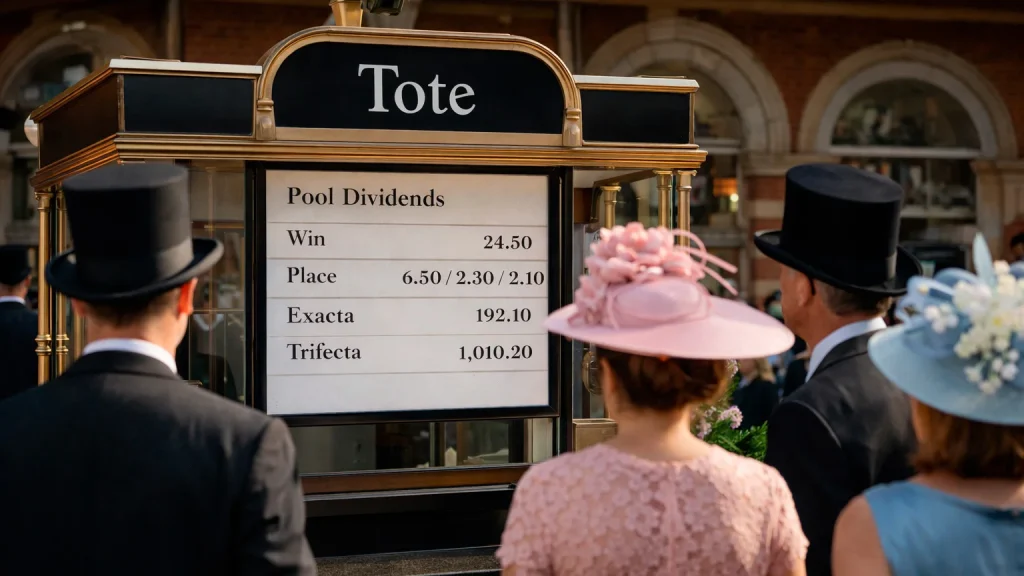
Pool betting predates the modern bookmaker. Before fixed odds became standard, all horse racing wagers operated on the pari-mutuel principle: punters bet into a common pool, and winners divided the pot. The Tote—originally the Horserace Totalisator Board—has operated this system in Britain since 1928, and it remains a distinctive alternative to conventional bookmaker betting.
The fundamental difference is straightforward. With fixed odds, you know your potential return before the race starts. With Tote pools, the dividend depends on how much money backs each horse and how many winning units share the payout. This uncertainty cuts both ways: popular selections often return less than fixed-odds equivalents, while overlooked winners can deliver substantially larger dividends.
Royal Ascot’s scale amplifies Tote betting appeal. Huge crowds and substantial pools mean dividends that genuinely compete with bookmaker prices. The meeting also features World Pool integration on selected races, combining international liquidity for potentially even larger returns. This guide covers the main Tote bet types, compares pool versus fixed-odds approaches, and explains how World Pool operates during Britain’s premier flat racing festival.
Tote Bet Types
Tote Win is the simplest pool bet. Select a horse to win, and if it does, you share the win pool dividend proportionally with other winning ticket holders. The dividend reflects how much was bet on all horses versus how much backed your winner. Heavy support for your selection reduces the dividend; light support increases it. Minimum stakes start at £2 for most Tote bets.
Tote Place pays if your selection finishes in a designated place position. Place terms mirror standard each-way rules: first and second in fields of 5-7 runners, first through third in fields of 8-15, and first through fourth in handicaps with 16 or more runners. The place pool dividend is typically smaller than win dividends because more outcomes qualify, but the trade-off is increased winning probability.
Exacta requires predicting the first two finishers in correct order. The pool is shared among all tickets correctly naming the winner and runner-up sequence. Exacta dividends can be substantial when unconsidered horses fill the first two positions, as fewer winning tickets divide the pool. This bet type suits punters with strong views on multiple horses who want exposure to combination outcomes.
Trifecta extends the challenge to first, second, and third in exact order. The difficulty of predicting three specific placings in sequence means winning tickets are rare and dividends frequently reach into hundreds or thousands of pounds. Permutation bets—covering multiple combinations of your selected horses—increase your chances but multiply stake costs proportionally.
Swinger offers flexibility that Exacta doesn’t. Pick two horses to finish first and second in either order. This halves the precision required while still demanding both selections reach the frame in top positions. Dividends sit below Exacta levels but above simpler win and place bets, representing middle ground between ease and reward.
The Placepot, covering six consecutive races, operates as a separate pool bet with its own dynamics. A detailed Placepot guide addresses that bet type specifically; the essential point here is that it represents pool betting extended across multiple races rather than a single event.
Remote gambling now accounts for 60% of the UK betting market, up from just 15% a decade ago. This shift has extended to pool betting, with Tote wagers available through bookmaker apps and the dedicated Tote platform. You no longer need to queue at on-course Tote windows to participate—though doing so remains part of the traditional raceday experience for many.
Quadpot and other multi-race pools follow similar principles across different race sequences. The common thread is collective wagering: you’re betting against fellow punters into shared pools rather than against a bookmaker’s fixed prices. This peer-to-peer structure creates different value dynamics worth understanding.
Tote vs Fixed Odds
The central question is whether pool dividends will exceed or fall short of fixed-odds prices. The answer depends on betting patterns that only become clear when pools close. Heavily backed favourites almost always return less on the Tote than bookmaker odds because concentrated support reduces dividends. Lightly backed winners return more because fewer winning tickets share the pot.
Big-field handicaps often favour Tote betting. When 20+ runners spread the betting, even placed horses may carry relatively light support. Royal Ascot’s cavalry charges—the Buckingham Palace Stakes, the Royal Hunt Cup, the Wokingham—create conditions where Tote place dividends sometimes exceed bookmaker each-way returns. This isn’t guaranteed, but the probability increases in races where no clear market leader dominates.
The Tote provides guaranteed minimum dividends that protect against worst-case returns. Currently, winning Tote Win tickets pay at least the Betfred industry Starting Price, while Tote Place dividends have their own minimum guarantees. These floors mean you’ll never receive dramatically worse returns than fixed-odds equivalents, while upside remains uncapped when overlooked horses win.
HBLB allocated £67 million toward prize money from levy funds during 2024-25, with the Tote contributing to the broader industry ecosystem through its operations. Pool betting’s historical integration with British racing creates cultural continuity that some punters value beyond pure mathematics. Supporting the Tote means supporting a system whose profits have always returned to the sport.
Dividend uncertainty creates psychological challenges. Some punters dislike not knowing their potential return before the race; others enjoy the anticipation as dividends calculate post-race. Consider your own preferences when choosing between pool and fixed-odds approaches. Neither is objectively superior—they serve different purposes and suit different temperaments.
For precise planning around specific selections, fixed odds provide certainty. For speculative betting where value might exist in overlooked horses, Tote pools offer upside potential. Many experienced Royal Ascot punters use both approaches: fixed odds on strong-conviction bets where price matters, Tote pools on outsiders where dividend surprise works in their favour.
World Pool at Ascot
World Pool combines betting pools from multiple countries into single, larger pots. For selected Royal Ascot races, UK Tote bets merge with pools from Hong Kong, Australia, and other international jurisdictions. The combined liquidity creates pools substantially larger than domestic UK betting alone would generate.
Larger pools benefit punters in several ways. Dividend stability improves because individual large bets affect overall pool percentages less significantly. Exotic bet dividends—Exacta, Trifecta—become more consistent when substantial international money contributes. The pooling also reflects global perspectives on horse quality, potentially revealing value where domestic and international assessments diverge.
World Pool operates on Group 1 and selected feature races during Royal Ascot. The flagship events—the Gold Cup, the Prince of Wales’s Stakes, the Queen Anne—typically qualify. Handicaps rarely feature because international markets focus on pattern racing. Check the day’s World Pool schedule to identify which races offer combined international dividends.
Access happens through standard Tote channels. Place your bet as normal; if the race is World Pool-eligible, your stake automatically joins the combined pool. No separate opt-in is required. The post-race dividend reflects the merged international outcome rather than UK-only returns.
Hong Kong betting volumes dwarf UK pools. When Hong Kong money enters World Pool races, dividend patterns may shift toward Hong Kong market preferences. A horse heavily supported in Britain but ignored in Hong Kong might return lower dividends than purely domestic Tote betting would suggest. Conversely, a Hong Kong favourite that UK punters overlook creates value for British backers if it underperforms.
World Pool adds genuine intrigue to Royal Ascot’s international races. The combined pools represent a rare opportunity for UK punters to access global liquidity on familiar horses. Treat it as premium Tote betting—the same principles apply, amplified by scale.
Responsible Gambling
Pool betting’s uncertain dividends can encourage stake escalation. The temptation to bet more when unsure of returns leads some punters to overcommit. Set stake limits before engaging with Tote pools, and treat dividend uncertainty as entertainment rather than a reason to increase investment.
Exotic bets—Exacta, Trifecta, permutations—carry higher house edges than simple win and place wagers. The complexity feels sophisticated but mathematically favours the operator. Use these bet types for occasional entertainment rather than regular betting patterns if managing bankroll carefully matters to you.
The Tote operates under UK Gambling Commission licensing, and responsible gambling resources apply equally to pool and fixed-odds betting. Deposit limits, cooling-off periods, and self-exclusion remain available through the Tote platform and through bookmakers offering Tote integration. GambleAware provides support at 0808 8020 133 for anyone concerned about their gambling behaviour.