
Cash Out at Royal Ascot: When to Take Early Profits
Best Horse Racing Betting Sites – Bet on Horse Racing in 2026
Loading...
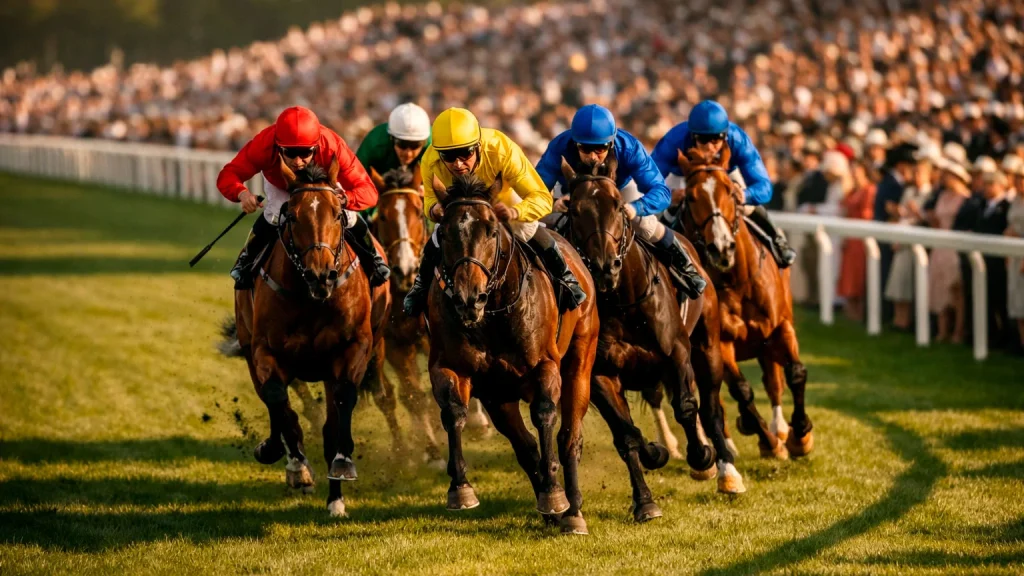
Cash out offers the option to settle bets before their natural conclusion. Your ante-post selection for the Gold Cup has shortened from 10/1 to 5/2 overnight; the bookmaker offers to buy back your bet at current value rather than waiting for the race. Alternatively, your accumulator has landed four legs with one remaining—cash out locks in guaranteed profit while leaving the final result to fate.
The feature creates decision points that didn’t exist before its introduction. Every price movement, every piece of news, every leg of an accumulator presents choices about whether to realise current value or let positions ride. These decisions feel empowering but also create anxiety that simple bet-and-wait approaches avoid.
This guide examines how cash out functions mechanically, explores scenarios where cashing out makes strategic sense, and honestly addresses the pitfalls that make cash out profitable for bookmakers rather than punters. Understanding both sides positions you to use the feature wisely during Royal Ascot rather than reacting emotionally to every price fluctuation.
How Cash Out Works
Full cash out settles your entire bet at the offered price. If you accept, the bet closes immediately—you receive the cash out amount regardless of subsequent results. The original potential payout no longer applies; you’ve exchanged uncertain future value for certain present value.
Partial cash out lets you close part of your position while leaving the remainder active. Cashing out 50% of an accumulator locks in half the offered value while maintaining 50% exposure to the final outcome. This flexibility suits situations where you want some certainty without fully abandoning your original position.
Auto cash out sets predetermined triggers. You might instruct your bookmaker to automatically cash out if your bet reaches a specific value—say, £100 profit—without requiring manual intervention. This feature removes emotional decision-making at crucial moments but requires confidence in your predetermined threshold.
Cash out values calculate based on current market odds and bet status. If your 10/1 ante-post selection has shortened to 5/1, cash out value increases because the horse’s winning probability has improved. If it’s drifted to 16/1, cash out value decreases. The calculation incorporates bookmaker margin, meaning offered cash out is always less than mathematically fair value.
British horseracing betting turnover declined 6.8% in 2024 compared to the previous year, according to the BHA Racing Report. Cash out represents one feature bookmakers use to maintain engagement during challenging periods—the constant decision-making keeps punters actively involved with their bets rather than passively waiting for results.
Not all bets qualify for cash out. Some promotions, bet types, or markets exclude the feature. Additionally, cash out availability can suspend without warning—during fast-moving markets, when liquidity issues arise, or when bookmakers want to limit exposure. Relying on cash out availability without confirmation sometimes produces disappointment when the option isn’t available when needed.
When to Cash Out
Ante-post positions sometimes warrant cashing out when circumstances change. Your Gold Cup selection was backed for its stamina; the ground is now forecast firm, neutralising that advantage. Cashing out at current value—presumably lower than peak but higher than zero—accepts that your original thesis no longer applies rather than hoping circumstances shift again.
Injury news or significant setbacks justify reassessment. A horse that picked up a minor injury in training might still run but with compromised preparation. If cash out value remains reasonable, locking in profit reflects updated information rather than emotional reaction.
Royal Ascot distributes over £10 million in prize money across its five days, according to the Racehorse Owners Association. These high-stakes contests attract ante-post betting months in advance, creating extended periods where cash out decisions become relevant as horses prepare and circumstances evolve.
In-running cash out suits scenarios where race development contradicts expectations. Your horse was meant to make all; it’s been headed early and is being niggled along. Cash out value drops but might still represent better outcome than likely defeat. The skill lies in reading races accurately enough to distinguish temporary difficulty from terminal decline.
Accumulator cash out involves weighing guaranteed profit against potential enhancement. Four legs landed, one to go—your acca currently offers £200 cash out or £350 potential return if the final leg wins. If you assess the final selection’s winning probability below 57% (200/350), cashing out offers better expected value. If you assess it higher, letting it ride makes mathematical sense.
Risk tolerance legitimately varies between punters. A £200 guaranteed profit might represent significant value to one person and trivial value to another. Cash out decisions need not be purely mathematical—personal circumstances, bankroll size, and relationship with money all legitimately influence whether locking in certainty beats pursuing larger uncertain rewards.
Strategic partial cash out lets you hedge without full commitment. Cashing out 70% guarantees meaningful profit while leaving 30% riding on the final outcome. This approach suits scenarios where you want protection against loss while maintaining some upside exposure. The mathematics balance certainty against possibility according to your preferences.
Cash Out Pitfalls
Bookmaker margin on cash out consistently favours the house. The offered value is always less than mathematically fair—typically 5-15% below true current value. Every cash out transfers edge to the bookmaker. Frequent cash out usage systematically erodes returns compared to letting bets run to natural conclusion.
Emotional decision-making undermines rational cash out strategy. Watching a selection shorten creates euphoria that encourages premature cashing; watching it drift creates panic that encourages abandonment. Neither emotion produces optimal decisions. The cash out feature deliberately generates these emotional states because emotionally reactive punters make bookmaker-favourable choices.
Regret from wrong decisions compounds emotionally. Cash out at £150, watch your horse win, and calculate the £400 you surrendered. Let it ride, watch your horse lose, and agonise over the £150 you rejected. Both outcomes produce pain that simple bet-and-wait approaches avoid. If you struggle with decision regret, cash out might create more psychological cost than the flexibility is worth.
When to let it ride reflects original bet logic. If your analysis supported the selection before, and nothing fundamental has changed, the original analysis still applies. Price movements reflecting market opinion don’t inherently invalidate your assessment—markets can be wrong. Cashing out because others disagree with you abandons conviction for consensus.
Over-monitoring produces excessive cash out consideration. Checking your bets constantly—watching values fluctuate, considering cashing at every movement—transforms betting from discrete decisions into continuous anxiety. Setting check-in points (morning of race day, for instance) rather than continuous monitoring reduces stress while maintaining appropriate oversight.
Responsible Gambling
Cash out creates continuous engagement that some find difficult to disengage from. The feature transforms one-time bet placement into ongoing management requiring repeated attention and decisions. If this continuous engagement feels compulsive rather than enjoyable, disabling cash out notifications—or avoiding the feature entirely—protects mental wellbeing.
The anxiety cash out generates sometimes exceeds its practical value. Constantly second-guessing decisions, monitoring fluctuating values, and managing decision regret produces psychological costs that the marginal mathematical value rarely offsets. Simpler approaches—bet and accept the outcome—suit punters who prefer clean decisions over optimisation anxiety.
Cash out losses feel different from standard bet losses. Cashing out for £50 then watching £300 potential evaporate produces sharper pain than simply losing a £10 stake. If cash out decisions create disproportionate distress, the feature doesn’t serve your interests regardless of theoretical value. GambleAware at 0808 8020 133 offers support for anyone finding gambling-related anxiety difficult to manage.