
Royal Ascot Placepot Betting: Rules and Strategies
 Available in US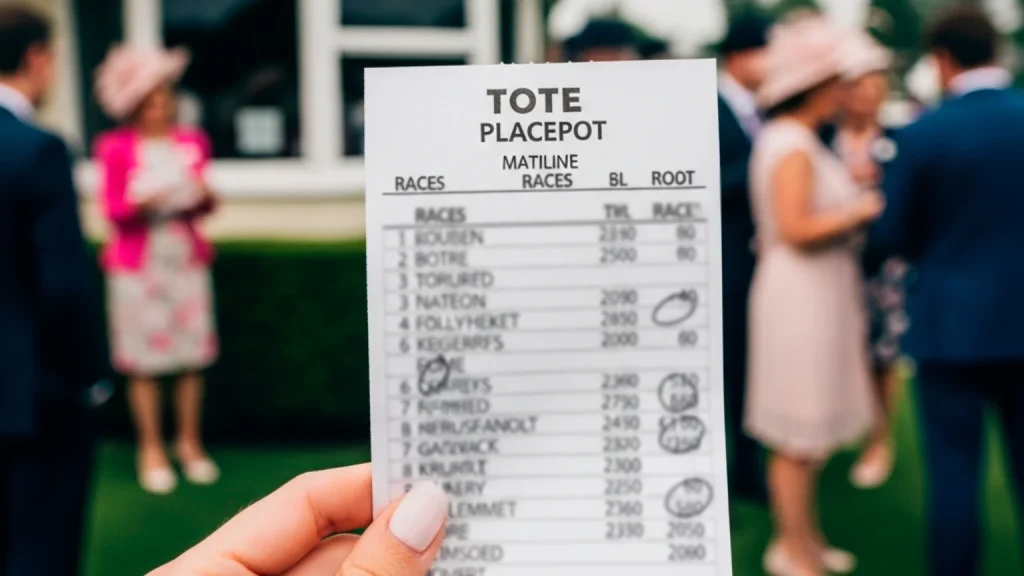
The Placepot remains one of horse racing’s best-kept secrets. While punters queue for straight win bets, savvy players quietly collect life-changing dividends from a wager that costs less than a round at the Ascot champagne bar. The premise is elegant: pick a horse to place in each of the first six races on a card. If all six oblige, you share the pool. If any fails, you lose your stake. Simple in theory, deceptively challenging in practice.
Royal Ascot amplifies everything about this bet. The pool swells to extraordinary levels when 286,541 visitors descend on Berkshire across five days, many of them combining their selections into enormous collective pots. A 10p Placepot line that might return £40 at an ordinary Tuesday meeting can deliver four-figure returns during the Royal meeting. The catch? Competitive fields, international raiders, and ground that changes with the English summer make six consecutive placed finishes genuinely difficult. That difficulty is precisely why the rewards can be so substantial.
This guide breaks down Placepot mechanics, examines strategies that separate regular winners from hopeful losers, and sets realistic expectations for what the bet can deliver at British racing’s flagship meeting. Whether you’re placing your first Tote wager or refining an existing approach, the principles here will sharpen your thinking.
Tote Placepot Mechanics and Six-Race Rules
The Placepot covers the first six races on any British or Irish card. Your task is to select at least one horse in each race that you believe will finish in a place position. What constitutes a place depends on the number of runners:
Races with 5-7 runners pay places 1st and 2nd. Fields of 8-15 runners extend this to 1st, 2nd, and 3rd. Handicaps with 16 or more runners—common at Royal Ascot—pay four places: 1st through 4th. These are the same terms as standard each-way betting, so the principles transfer directly.
The minimum unit stake is typically 10p per line. A single selection in each race costs 10p total. Two selections in one race and single picks elsewhere creates two lines at 20p. The mathematics compound quickly: picking two horses in each of six races produces 64 lines (2×2×2×2×2×2), costing £6.40. Three selections in two races and two in the remaining four generates 144 lines at £14.40. Royal Ascot regulars routinely run permutations into hundreds of lines, though this demands serious bankroll management.
Non-runners are handled simply. If your only selection in a race is withdrawn, your stake carries forward to a favourite substitution—the Tote automatically replaces your selection with the starting price favourite. If you’ve picked multiple horses in that race, your non-runner is removed and the bet continues with your remaining selections. Stakes are not refunded for non-runners in Tote pools.
All bets must be placed before the first race in the sequence begins. You cannot add legs once racing starts, making morning odds assessment and final declarations essential preparation. According to the Countryside Alliance, UK racecourses attract 5.62 million visitors annually, and the Tote pool system means you’re betting against fellow punters rather than the bookmaker—a fundamentally different value proposition from fixed-odds wagering.
Winnings are distributed as dividends, calculated by dividing the total pool (minus the Tote’s percentage deduction) by the number of winning units. If only three punters collect on a pool of £300,000, each winning line receives a substantial share. If thousands of players share the spoils, individual returns diminish accordingly. The unpredictability of dividend size is central to the Placepot’s appeal and its risk.
Strategies for Royal Ascot
The eternal Placepot debate centres on banking versus spreading. Banking means selecting just one horse in certain races—typically short-priced favourites with strong place credentials. Spreading involves picking multiple horses in races where confidence is lower. Royal Ascot demands a nuanced blend of both approaches.
Bank candidates at Royal Ascot tend to emerge in conditions races with small fields. A five-runner Group 1 with two standout performers might warrant banking the obvious place candidate. The Coronation Stakes regularly features odds-on favourites who simply need to hit the frame. Here, single selections keep permutation costs manageable while maintaining survival chances.
Handicaps tell a different story entirely. The Buckingham Palace Stakes routinely attracts 25+ runners, turning place predictions into educated guesswork. Spreading to four or five selections in such events acknowledges the chaos. Draw biases, unexposed improvers, and the sheer quality depth of Royal Ascot handicaps make concentration risky. Research from racing analysts suggests that 68% of Royal Ascot ticket buyers are casual or first-time attendees—many of whom back names and colours rather than form, creating unpredictable market movements.
A balanced Royal Ascot Placepot might look like this: bank one horse each in two smaller-field Group races, select three horses in two competitive conditions races, and spread to four in two handicaps. This creates 144 lines (1×1×3×3×4×4), costing £14.40 at 10p per line. The approach survives chaos in the open races while keeping expenditure reasonable.
Budget management cannot be overstated. It’s tempting to cover every danger in every race, but permutations escalate geometrically. Four selections per race across six races equals 4,096 lines—over £400 in stakes. That might be justified if your edge is exceptional, but most punters are better served by concentrated picks in races they’ve genuinely analysed rather than blanket coverage driven by fear of missing a winner.
Pay attention to final declarations. Royal Ascot supplementary entries and late withdrawals often reshape race dynamics. A field that looked competitive at the five-day stage might thin to a near-certainty by race morning. Building your Placepot after declarations—ideally on the morning of racing—gives you the most accurate picture. Some players construct provisional permutations earlier in the week, then adjust based on final fields.
Tote pool trends matter too. Popular fancies attract heavy Placepot money, reducing their dividend contribution if they place. Overlooked types, when they run into the frame, create value precisely because fewer winning units share the pot. Contrarian thinking has its place here, though never at the expense of genuine place probability.
Dividend Expectations
Royal Ascot Placepot dividends vary dramatically from day to day. When favourites dominate, thousands of winning units share the pool, and returns might be modest—£10 to £50 per 10p unit is common on such cards. When upsets cascade, the pool concentrates among fewer survivors, and dividends can reach £500, £1,000, or occasionally higher per unit.
The dividend calculation follows a straightforward formula. Take the total pool, subtract the Tote deduction (currently 28% on Placepots), then divide by the number of winning units. If a Royal Ascot Placepot pool reaches £400,000 and only 800 winning 10p units survive, each unit returns approximately £360 after deductions. If 10,000 units survive, each receives roughly £28.80.
Historical analysis shows that genuinely large Placepot dividends typically require at least two placed horses starting at 10/1 or longer. When a 25/1 shot fills a frame position and eliminates thousands of permutations, survivors benefit enormously. This is why strategic spreading in handicaps—selecting long-priced place candidates with genuine credentials—can transform returns.
Ascot CEO Felicity Barnard noted after the 2025 meeting that it was “a fantastic week with some brilliant sport to enjoy,” reflecting both the quality of racing and the event’s commercial success. That success translates directly into pool size. The flagship meeting’s Placepot pools routinely exceed £300,000 daily, compared to £15,000-£30,000 at standard fixtures.
Manage expectations carefully. The Placepot is a survival contest, and the survival rate is genuinely low. Six consecutive placed finishes requires both good selection and cooperative luck. A strong run might be undone by a late faller or a horse that dwells in the stalls. Variance dominates short-term results. Approach the bet as entertainment with upside potential rather than as a reliable income source, and the occasional substantial dividend becomes a genuine thrill rather than an expected outcome.
Many experienced punters treat their total Royal Ascot Placepot spend as a fixed entertainment budget. Allocating £50-£100 across the week, distributed according to confidence levels each day, offers meaningful participation without excessive risk. If one day delivers a substantial return, the week’s entertainment has effectively paid for itself.
Responsible Gambling
The Placepot’s low unit stake makes it feel safer than other bet types, but permutation costs can accumulate quickly. Set a firm daily budget before building your selections and resist the urge to add “one more coverage pick” that inflates your total spend. The bet should enhance your Royal Ascot experience, not create financial stress.
Track your stakes accurately. With multiple lines at small unit costs, it’s easy to lose sight of total outlay. Write down your permutation cost before placing, and consider whether that sum represents money you can genuinely afford to lose entirely. If you’re chasing losses from previous days’ Placepots by increasing stakes, step back and reassess.
The Tote pools operate under UK Gambling Commission oversight, and all licensed operators must provide tools for setting deposit limits and self-exclusion. Use these features if your betting begins to feel compulsive. Resources such as GambleAware offer confidential support for anyone concerned about their gambling behaviour. The contact line is available 24/7 at 0808 8020 133.
