
Betting Exchanges vs Bookmakers for Royal Ascot
 Available in US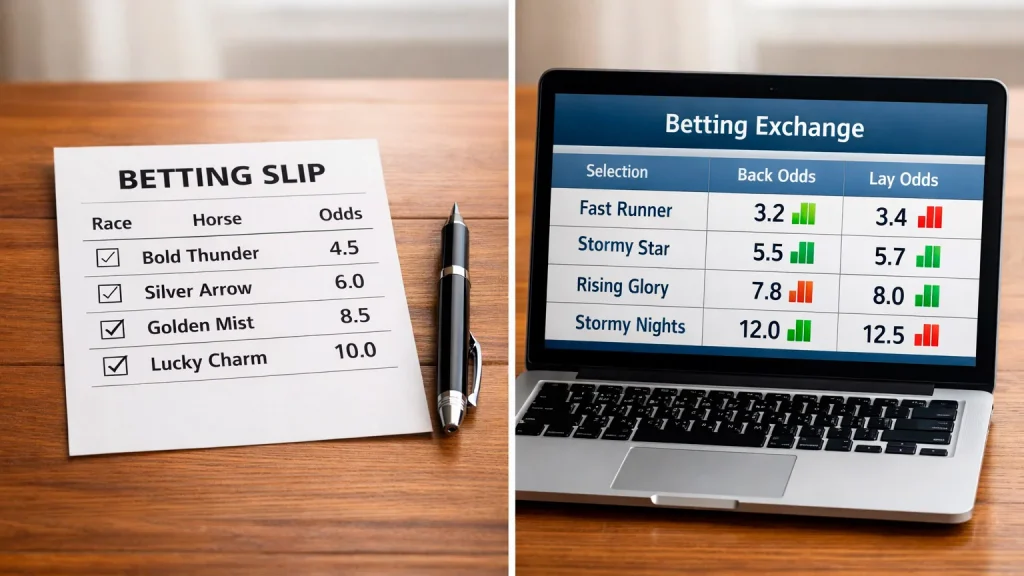
Betting exchanges revolutionised gambling by eliminating the bookmaker from the transaction. Instead of accepting odds set by a company, exchange users bet against each other—one person backing a horse, another laying it. This peer-to-peer model often produces better prices than traditional bookmakers, but it operates differently enough that understanding both systems helps Royal Ascot punters maximise their options.
Traditional bookmakers set odds, accept bets, and profit from the margin built into their prices. Exchanges charge commission on winning bets but don’t set odds themselves—the market determines prices through supply and demand. These structural differences create scenarios where each approach excels, and sophisticated punters use both according to circumstance.
This guide explains exchange mechanics for those unfamiliar with the concept, identifies situations where exchanges offer genuine advantages over bookmakers, and explores strategies for combining both approaches during Royal Ascot. Neither system is universally superior; understanding when to use each creates flexibility that exclusive bookmaker users lack.
Understanding Lay Betting and Exchange Markets
Peer-to-peer betting means every exchange transaction involves two parties. When you back a horse at 5.0 (4/1 in fractional odds), someone else is laying that horse—betting it won’t win. The exchange matches these opposing positions, holds stakes from both parties, and distributes winnings after the race. You’re betting against fellow punters rather than against a corporate bookmaker.
Backing works identically to traditional betting. You select a horse, choose a stake, and take available odds. If the horse wins, you receive your winnings minus commission; if it loses, you lose your stake. The familiarity makes exchange backing accessible for bookmaker users transitioning to exchanges.
Laying reverses the position. When you lay a horse, you’re betting it won’t win—effectively acting as the bookmaker. Your liability equals the layer’s potential payout if the horse wins; your profit equals the backer’s stake if the horse loses. Laying requires understanding that you’re taking the opposite side of the bet, with different risk/reward mathematics than backing.
The UK gambling industry generated £16.8 billion in gross gaming yield during 2024-25, according to the Gambling Commission. Exchanges represent a fraction of this market but attract serious punters through their competitive pricing and trading flexibility.
Commission structures vary by exchange and account status. Betfair—the dominant exchange—charges 2-5% commission on net winnings depending on loyalty tier. Smarkets and Betdaq offer lower commission rates to attract users. Commission applies only to winning bets; losing bets incur no commission. This structure differs fundamentally from bookmaker margins built into all odds offered.
Liquidity describes how much money is available at each price. High liquidity means substantial sums can be matched quickly; low liquidity means your bet might not be fully matched or might move prices significantly. Royal Ascot’s major races attract excellent exchange liquidity; supporting races see thinner markets. Understanding liquidity conditions shapes realistic expectations about which odds you can actually secure.
Unmatched bets represent requests that haven’t found counterparties. If you request 6.0 on a horse but the best available price is 5.5, your bet remains unmatched until either price moves or you accept the available odds. Managing unmatched bets—cancelling, adjusting, or waiting—requires more attention than bookmaker betting where all prices are immediately available.
When Exchanges Beat Bookies
Better odds scenarios emerge regularly on exchanges. Without bookmaker margin inflating prices, exchange odds often exceed bookmaker equivalents. A horse offered at 7/2 with bookmakers might trade at 4.2 or 4.5 on exchanges—meaningful differences that compound over time. Comparing prices before betting identifies where value lies.
Remote gambling now represents 60% of the UK betting market, with exchanges contributing to this digital shift. The technology that enables exchange trading—real-time matching, price discovery, instant settlement—requires digital infrastructure that physical betting shops cannot replicate.
In-play advantages favour exchanges over bookmakers. Exchange odds during races reflect genuine market opinion rather than algorithmic risk management. When bookmakers suspend markets, exchanges often continue trading. The ability to lay horses in-running—betting against them while the race unfolds—creates options bookmaker markets don’t offer.
Laying horses creates unique opportunities. If you believe a heavily backed favourite won’t win, laying offers direct expression of that view. Bookmakers don’t let you bet against specific horses; exchanges do. This capability suits contrarian punters who identify overbet selections where market consensus seems wrong.
Cash-out flexibility exceeds bookmaker equivalents on exchanges. Because you can both back and lay, closing positions involves taking opposite bets—backing what you’ve laid or laying what you’ve backed. This trading approach allows precise profit-taking or loss-cutting that bookmaker cash-out functions approximate less accurately.
Price requests on exchanges let you set odds rather than accepting what’s available. If no one offers 6.0 on your selection but you believe it should be that price, you can request 6.0 and wait for matching. Bookmakers offer their prices only; exchanges let you try for better ones. The trade-off is potential non-matching if your requested price never attracts a counterparty.
Exchange commission creates effective breakeven thresholds. At 5% commission, you need odds of approximately 1.05 just to break even on a winning bet. This mathematical reality means very short-priced bets become unprofitable after commission in ways they wouldn’t with bookmakers. Understanding commission impact shapes which bets suit exchange versus bookmaker placement.
Combining Both
Bookmaker free bets combined with exchange laying creates risk-free profit opportunities. The technique—often called matched betting—uses free bet promotions while simultaneously laying the same selection on an exchange. Whatever the outcome, one side wins while the free bet stake costs nothing. This approach extracts value from promotional credits that pure bookmaker betting can’t guarantee.
The basics are straightforward. Accept a bookmaker free bet offer, back a selection with the free bet, and lay the same selection on an exchange at similar odds. If the horse wins, the bookmaker pays out while the exchange lay loses—but the lay loss approximates the free bet’s stake value, which cost you nothing. If the horse loses, the exchange lay wins while the worthless free bet expires. Either way, you profit from the free bet promotion minus exchange commission.
Arbitrage opportunities occasionally arise when bookmaker and exchange prices diverge significantly. Backing with one and laying with the other locks in guaranteed profit regardless of outcome. These opportunities are rare at Royal Ascot’s efficient markets but do appear, particularly in ante-post betting where price discrepancies persist longer. Finding arbitrage requires monitoring multiple platforms simultaneously.
Strategic placement uses each system’s strengths. Take bookmaker prices when enhanced odds promotions exceed exchange equivalents. Use exchanges when their prices beat bookmaker offerings or when you want to lay rather than back. Keep accounts active with both types—Royal Ascot rewards punters who access every available option.
Exchange trading during Royal Ascot suits experienced users who understand price movements. Backing a horse pre-race, then laying at shorter odds as money arrives, locks in profit before the race begins. This trading requires capital, discipline, and price-reading skill that takes time to develop. Beginners should focus on simpler approaches before attempting sophisticated trading strategies.
Responsible Gambling
Exchange complexity can encourage over-engagement. The constant price movements, trading possibilities, and in-play markets create continuous action that some punters find difficult to disengage from. Setting session time limits helps prevent exchange platforms from consuming disproportionate attention.
Laying carries different risk characteristics than backing. Your liability when laying exceeds your potential profit—the opposite of backing’s risk/reward structure. Laying short-priced horses creates substantial liability for modest potential gains. Understanding these mathematics before laying prevents unpleasant surprises when liabilities are called.
Both exchanges and bookmakers operate under UK Gambling Commission licensing, with responsible gambling tools available across platforms. Deposit limits, reality checks, and self-exclusion apply regardless of which betting system you prefer. GambleAware at 0808 8020 133 provides support for anyone concerned about gambling behaviour on either platform type.
