
King George Stakes Betting: Odds and Promotions
 Available in US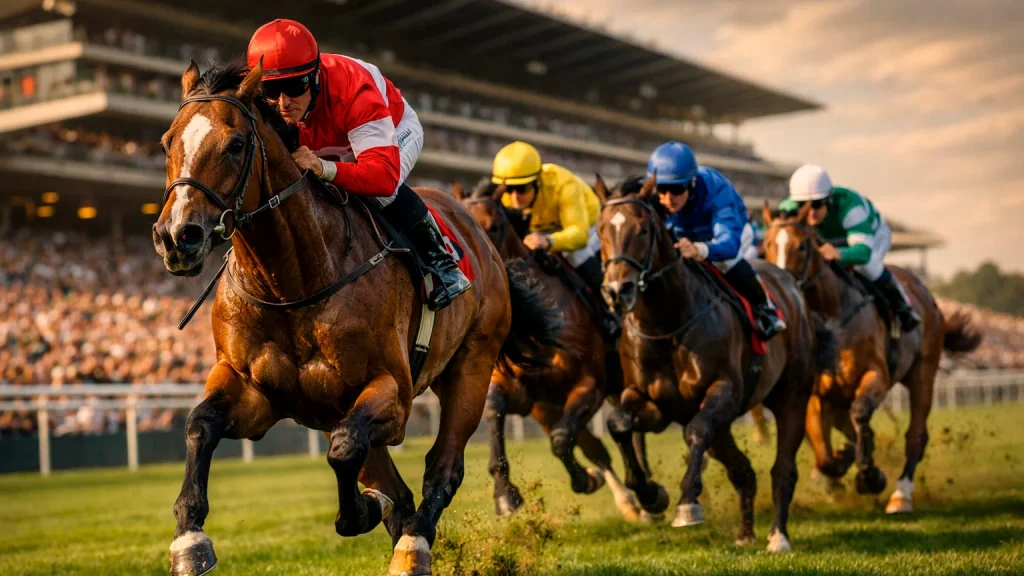
The King George VI and Queen Elizabeth Stakes represents British flat racing’s midsummer championship. Run in late July at Ascot over a mile and a half, this Group 1 event tests middle-distance excellence under conditions that reward stamina, tactical intelligence, and genuine class. The race brings together Derby and Oaks winners, proven older horses, and international raiders competing for prize money that now exceeds anything else on British soil.
For punters, the King George offers a betting proposition unlike any other. Small fields of elite performers mean markets shaped by form assessment rather than field chaos. Historical trends provide meaningful guidance. The winner invariably confirms themselves among Europe’s best middle-distance performers, with implications for autumn targets including the Prix de l’Arc de Triomphe.
This guide examines the race’s profile, identifies betting angles that consistently produce value, and surveys the promotional landscape surrounding Britain’s richest race. Whether you’re an ante-post investor or a day-of-race punter, understanding the King George’s unique characteristics informs smarter wagering decisions.
King George Stakes Race Profile and History
The King George carries a prize fund of £1.5 million, making it the richest race ever staged at Ascot and the most valuable contest in British flat racing. This financial status attracts the best horses from Britain, Ireland, and increasingly from France and beyond. Field sizes remain intimate—typically eight to twelve runners—because only genuine Group 1 performers accept the challenge.
Run over one mile four furlongs on Ascot’s right-handed track, the race demands versatility. The undulating terrain punishes one-paced stayers while the distance tests sprint-influenced horses. Winners combine tactical speed with stamina reserves, typically rating highly on both Timeform and Racing Post Ratings. The profile suits middle-distance specialists rather than pure stayers or milers stretching their optimal trip.
Historical patterns reveal consistent trends. Three-year-olds face a weight allowance that occasionally proves decisive against older rivals who must concede pounds at the weights. The balance has shifted over decades—some eras favour youth, others experience—but the form book remains the ultimate arbiter. Derby winners often attempt the King George as confirmation of Classic authority; some succeed gloriously while others discover limitations against hardened opposition.
Trainers with King George pedigree demand respect. Aidan O’Brien has dominated in recent decades, with John Gosden, Sir Michael Stoute, and Andre Fabre also featuring prominently. When leading trainers target the race with obvious contenders, markets respond accordingly. Value often lies in identifying horses whose form hasn’t translated into market support—international raiders without UK exposure, or lightly raced improvers whose potential exceeds proven form.
Ground conditions matter substantially. Ascot in late July can ride anywhere from firm to soft depending on English summer unpredictability. Some King George contenders need specific conditions to perform optimally; identifying horses whose ground preferences align with actual conditions separates shrewd assessment from hopeful guessing.
The Racehorse Owners Association announced the £1.5 million purse as part of Ascot’s record prize money commitment, reflecting the track’s ambition to host world-class racing. The financial stakes attract the best; the betting challenge lies in separating the genuine best from the merely present.
Betting Angles
Derby form provides the most reliable guide for three-year-old contenders. Winners and placed horses from Epsom typically reproduce their form at Ascot, though the right-handed track and different configuration suit some profiles better than others. Horses who raced prominently at Epsom often continue that style; hold-up performers may find Ascot’s gradual climb to the finish more accommodating than Epsom’s downhill dash.
Older horses entering from strong form cycles deserve careful assessment. A five-year-old returning from a confidence-boosting Group 2 victory may be peaking at exactly the right moment. Conversely, last year’s hero returning for a repeat might be on the decline. Current form trumps historical achievement when evaluating the seasoned contingent.
Trainer patterns at Ascot itself offer insight. Some operations consistently produce peak performances at the track; others underperform relative to expectations. Course form among jockeys matters too—the Ascot finish rewards specific riding styles, and jockeys who thrive there maintain advantages over less experienced visitors.
Ascot Racecourse reported turnover of £113.1 million during 2024, reflecting the venue’s commercial significance and the betting volumes major races attract. The King George represents the track’s flagship summer event, commanding attention from serious punters throughout Britain and beyond. That attention creates market efficiency, but inefficiencies persist in less-scrutinised areas—the third and fourth horse in betting, outsiders with legitimate place claims, and horses whose connections have kept them deliberately under the radar.
Pace analysis influences King George outcomes more than many handicap events. With small fields and quality opposition, how the race unfolds tactically shapes finishing order. Genuine front-runners face questions about whether they’ll get an uncontested lead or find challengers disrupting their rhythm. Hold-up horses need pace to run at; a slowly run race transforms their tactical advantage into a finishing sprint that may not suit.
Each-way betting finds natural application in the King George. Fields small enough for place percentages to favour punters, combined with price disparities between market leaders and outsiders, create each-way value that straight win betting may miss. A 10/1 shot placing behind two market leaders returns meaningful profit at standard terms, and the quality depth of King George fields means genuine contenders often trade at double-digit prices.
BHA CEO Brant Dunshea observed that “perhaps the biggest takeaway is that there is a vast, untapped market for the sport.” The King George, as British racing’s richest event, represents the pinnacle of what the sport can offer both spectators and bettors. Understanding its dynamics thoroughly positions you to engage with racing’s highest-stakes contest effectively.
Offers for King George
Major bookmakers treat the King George as a promotional flagship. Enhanced odds, money-back specials, and free bet offers proliferate in the days surrounding the race. The pattern resembles Grand National and Derby treatment—recognition that prestige events attract casual punters whose lifetime value justifies marketing spend.
Enhanced odds on selected runners provide straightforward value. A horse priced at 4/1 industry-wide might appear at 6/1 or 7/1 through new customer boost offers. These promotions typically cap maximum stakes (often £10-£20) and pay additional winnings as free bets rather than cash. The effective value remains substantial for punters who would have backed the selection anyway at smaller stakes.
Money-back specials target specific scenarios. “Refund if your horse finishes second” removes the sting of narrow defeat in a race where quality compression makes placed finishes common among beaten favourites. Terms vary—some offers return stakes as cash, others as free bets with subsequent wagering requirements. Checking exact conditions before betting prevents disappointment.
Existing customer offers reward loyalty during major events. Price boosts on King George selections, enhanced each-way terms, and acca boosts incorporating the race encourage engagement from accounts that might otherwise sit idle. Log into your regular bookmaker accounts during the King George buildup to identify available promotions; many require opt-in before qualifying bets are placed.
Tote World Pool operates on the King George, merging international liquidity for potentially enhanced dividends. The race’s global profile—attracting European runners and international betting interest—makes World Pool participation natural. Consider Tote betting alongside fixed-odds positions for diversified exposure to Britain’s richest race.
Responsible Gambling
Prestige events encourage elevated stakes. The King George’s status as Britain’s richest race creates psychological pressure to bet accordingly. Resist this impulse. Stake sizes should reflect your overall bankroll management, not the race’s prize money. A £10 bet on the King George involves exactly the same risk dynamics as a £10 bet on a Monday novice race.
Multiple promotional offers create temptation to over-bet. Collecting every enhanced price and money-back special requires substantial cumulative stakes. Be selective about which offers genuinely serve your interests rather than exhaustively pursuing everything available.
The King George provides entertainment value beyond betting returns. Watching Britain’s best middle-distance horses compete for the sport’s richest prize constitutes an event worth following regardless of financial exposure. If your betting enhances that enjoyment, proceed carefully. If betting stress detracts from it, step back. Support resources including GambleAware at 0808 8020 133 remain available for anyone needing guidance.
